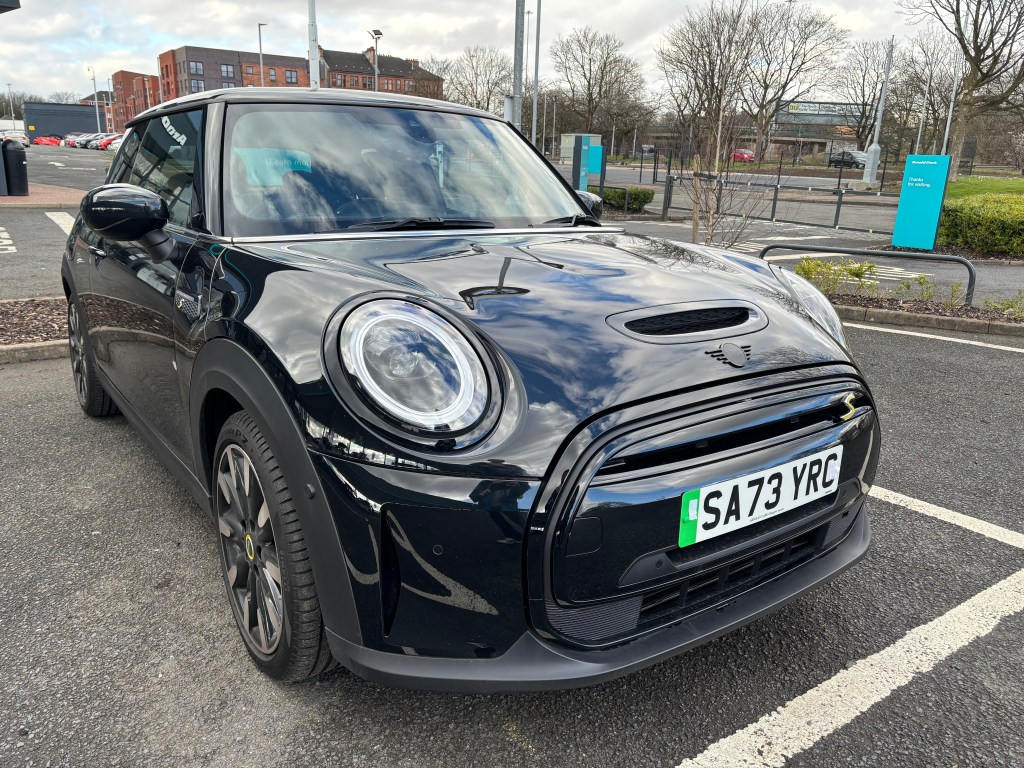
The Mini is the world’s most famous small car. Sixty years on from its debut, this is the first mass-produced electric model.
Built in the same Cowley, Oxfordshire factory the iconic brand was born in, the Mini Electric is also undoubtedly the company’s most important product since its reimagining under BMW management in 2001.
From appearances alone, however, it looks like business as usual. In contrast to many other carmakers, who lean into striking and disruptive design to set their electric products apart, Mini have entered the EV age with a familiar package.
Unlike the unconventional BMW i3 with which it shares its electric motor, this is a car that goes about its battery-powered business without making a statement.
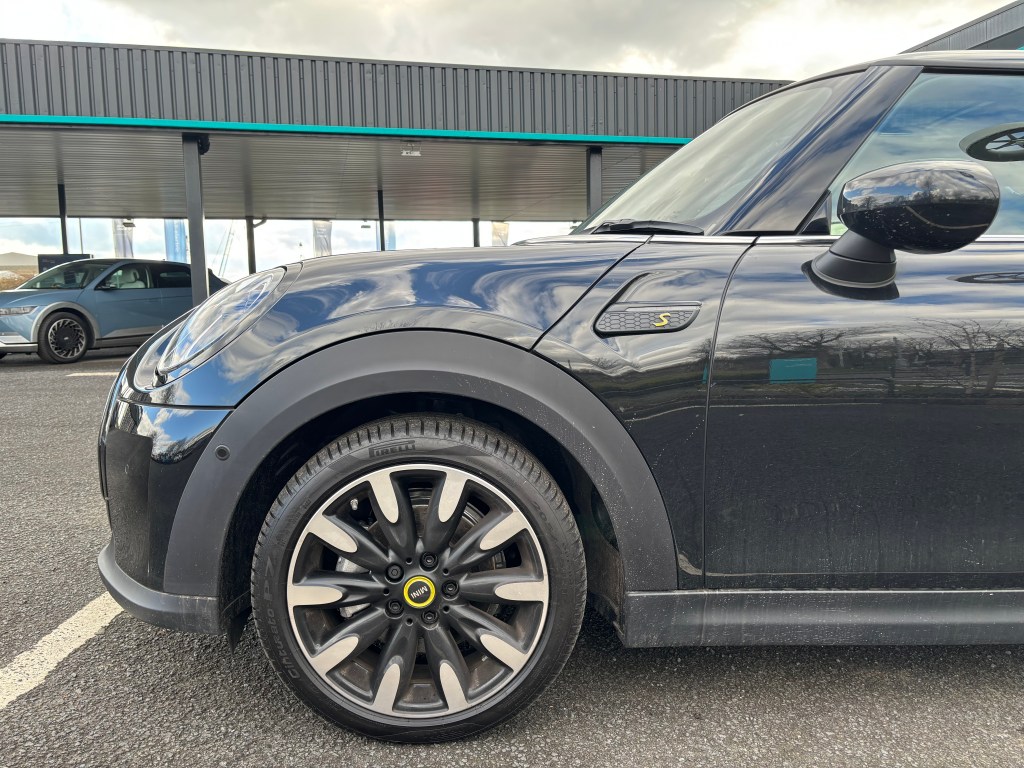
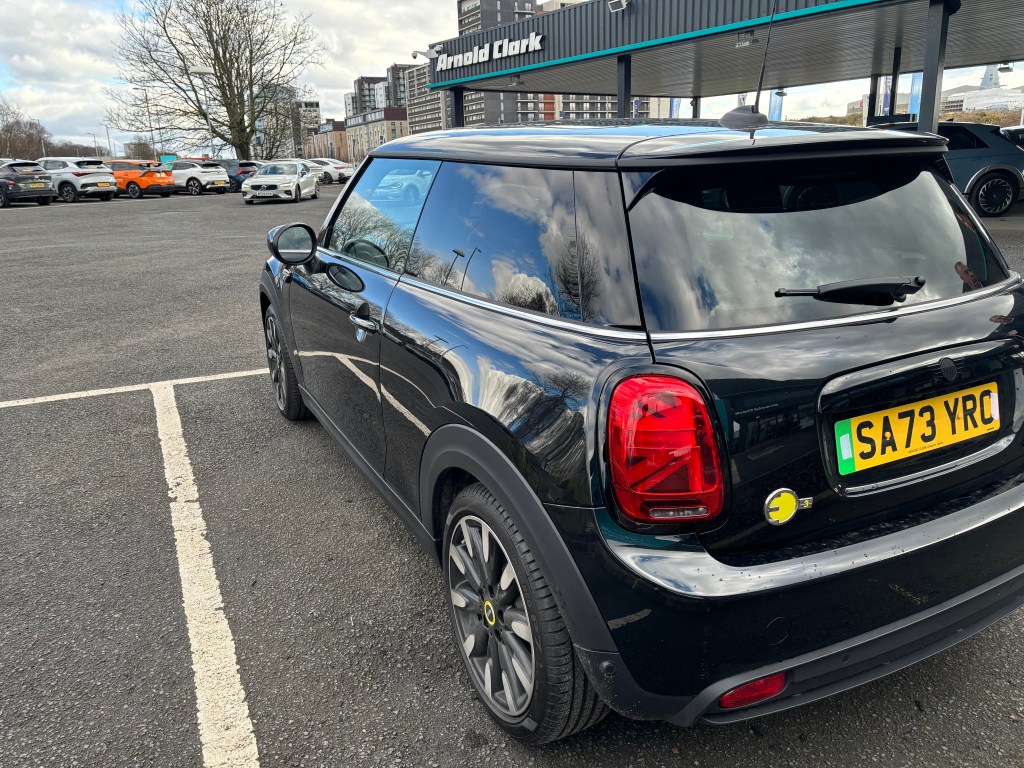
High-vis yellow badges aside, there aren’t many details to distinguish this car from a petrol-powered Cooper.
Familiarity is a strength here though. Mini is, of course, amongst the most recognisable and cherished names in the industry, with a loyal following. When it’s time to replace their old car, a lot of Mini owners will simply get a newer Mini.
It’s understandable then that the brand has chosen not to take a lunge forward, but a well-judged first step into the electric market, even if it’s perceived as playing it safe.
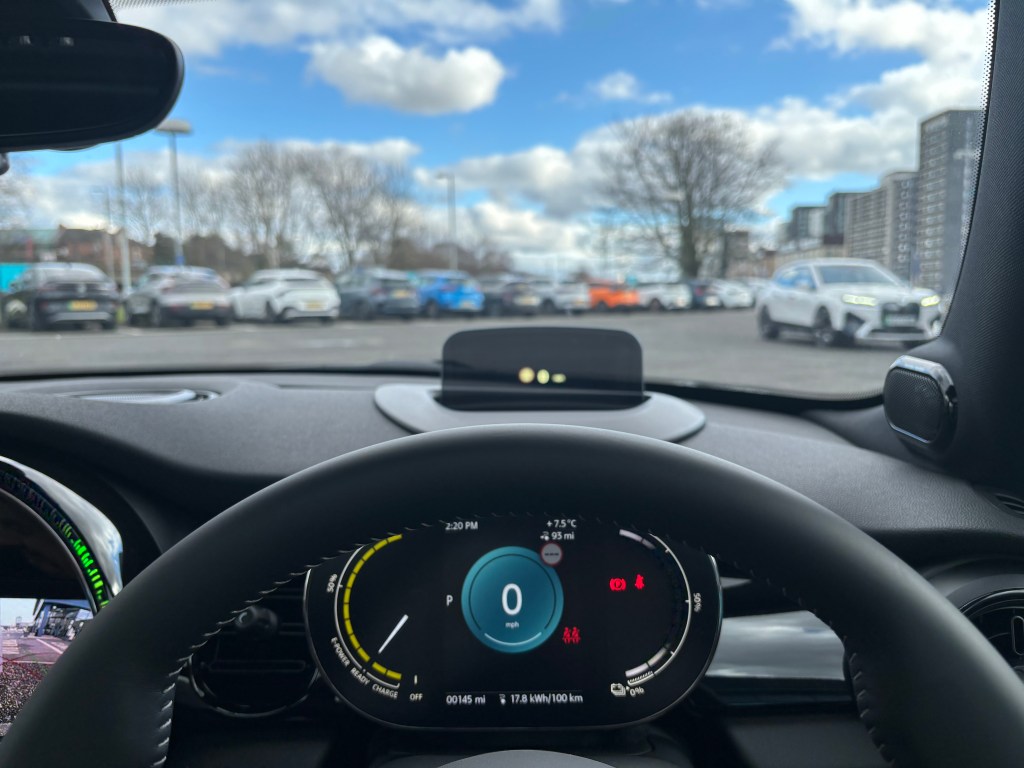
Today’s drive will be in a top-of-the-range “Level 3” model, identified by its luxurious black leather interior and head up display (HUD) unit, which lifts elegantly out of the dashboard and into the drivers’ view through the upright windscreen and over the short bonnet.
The patriotic Union flag taillights are present but, sadly, this example doesn’t wear the “Power Spoke” wheels, styled to look like a UK three-pin plug socket in another example of Mini design playfulness.
Instead, this car is fitted with black and silver “Roulette” alloys, also smart 17-inch items, but not as fun.
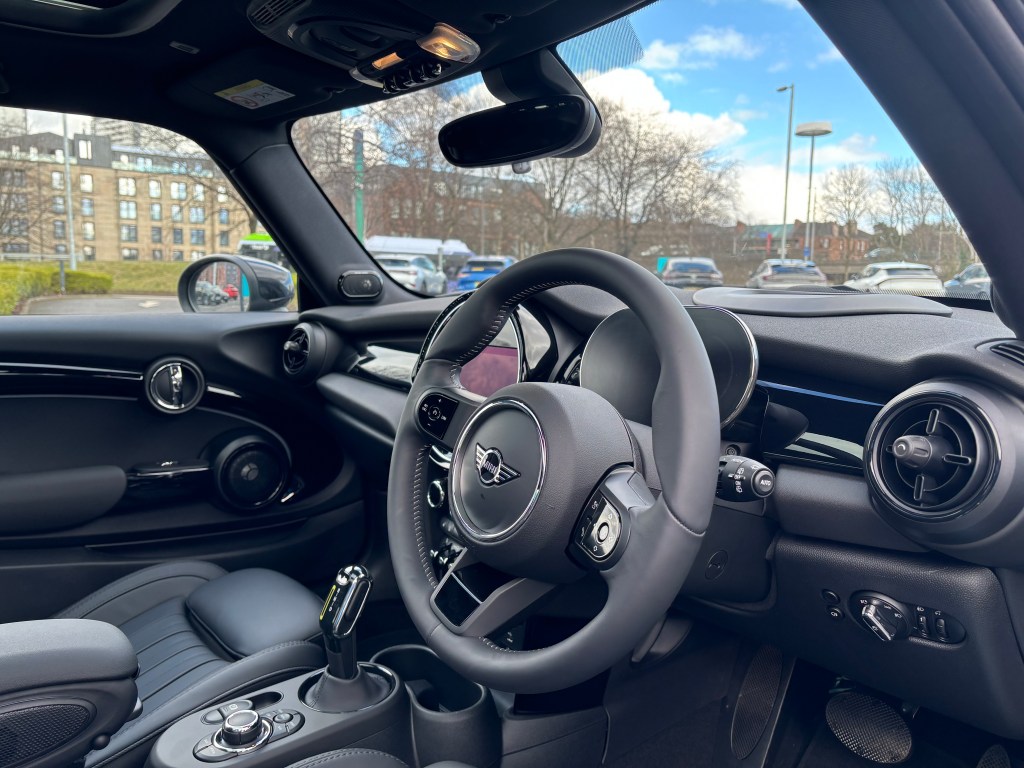
From the comfortable driver’s seat, the inside of the car feels ergonomically sculpted with the steering wheel chunky in the hands. The dials and switches in the interior feel tactile and hard-wearing, and the panoramic roof fitted to this car brings a lot of natural light into the cabin.
Complimentary to that is the mood lighting, which changes colour depending on which mode you’re driving the car in. More on that later.
Surprisingly for a small car there is also generous room for two adults in the back – once they’ve squeezed behind the front seats, that is, as the electric Mini is only available as a two-door.
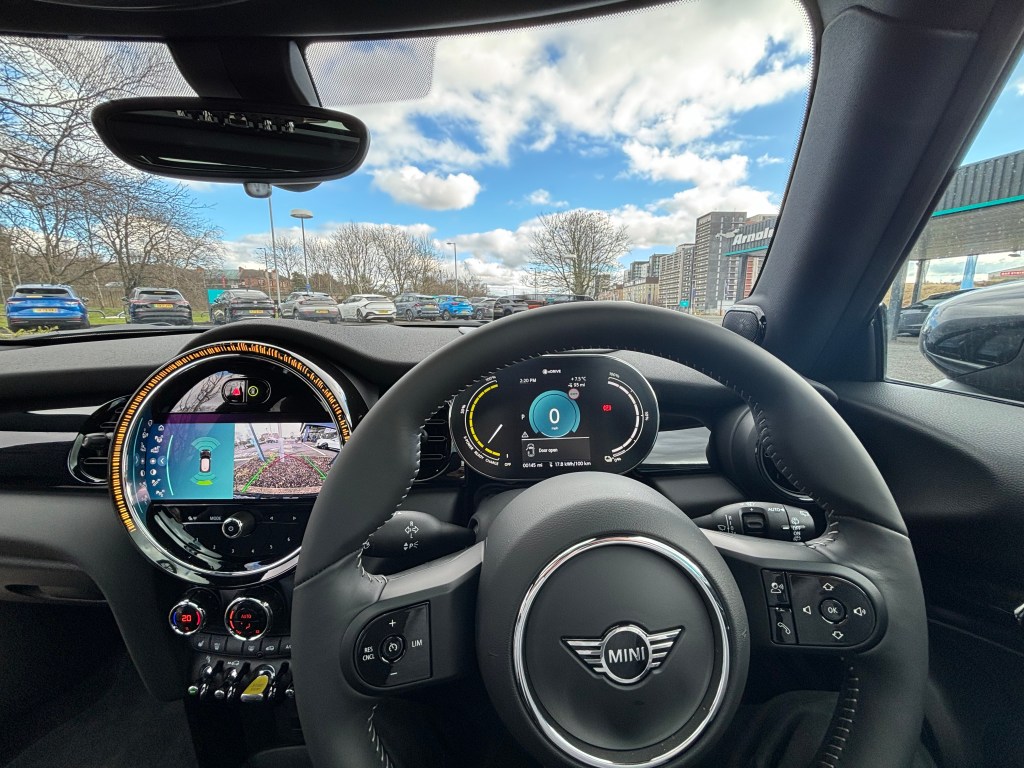
Powering the car on is accompanied with a Star Wars whoosh through the speakers, a welcome touch to the otherwise silent driving experience.
Equally futuristic is the pill-shaped digital display, which sits behind the steering wheel resembling an oversized mobile phone with all the driver-essential information.
Another reference to Minis of old is the large-diameter chrome circle which houses the infotainment touchscreen, a throwback to the speedometer that once lived in the middle of the dashboard.
An electric car will always be heavier than its petrol equivalent due to the weight of its batteries, the penalty in the Mini being 230kg.
However, far from feeling cumbersome, it sets off with chirpy enthusiasm and turns sharply as I drive it out of its parking bay.
This is down to some clever repackaging from BMW, distributing the weight evenly across the car’s footprint and keeping its centre of gravity as low as possible.
The small 32.6kWh battery pack lives under the back seats, and its 136kW motor where the engine would be under the bonnet. By EV standards, 1440kg is featherweight.
The other benefit that comes with its small battery is how quickly it charges, taking only 36 minutes to get from 0-80% of its capacity at a 50kW public fast charger, but of course this comes with the downside of limited range.
The Mini claims just 144 miles from a full charge. In the real world, drivers can expect to get 90-110 miles out of it, limiting its use to short or urban journeys. It will also sadly limit its appeal to customers who need a car to cover long distances or have long commutes.
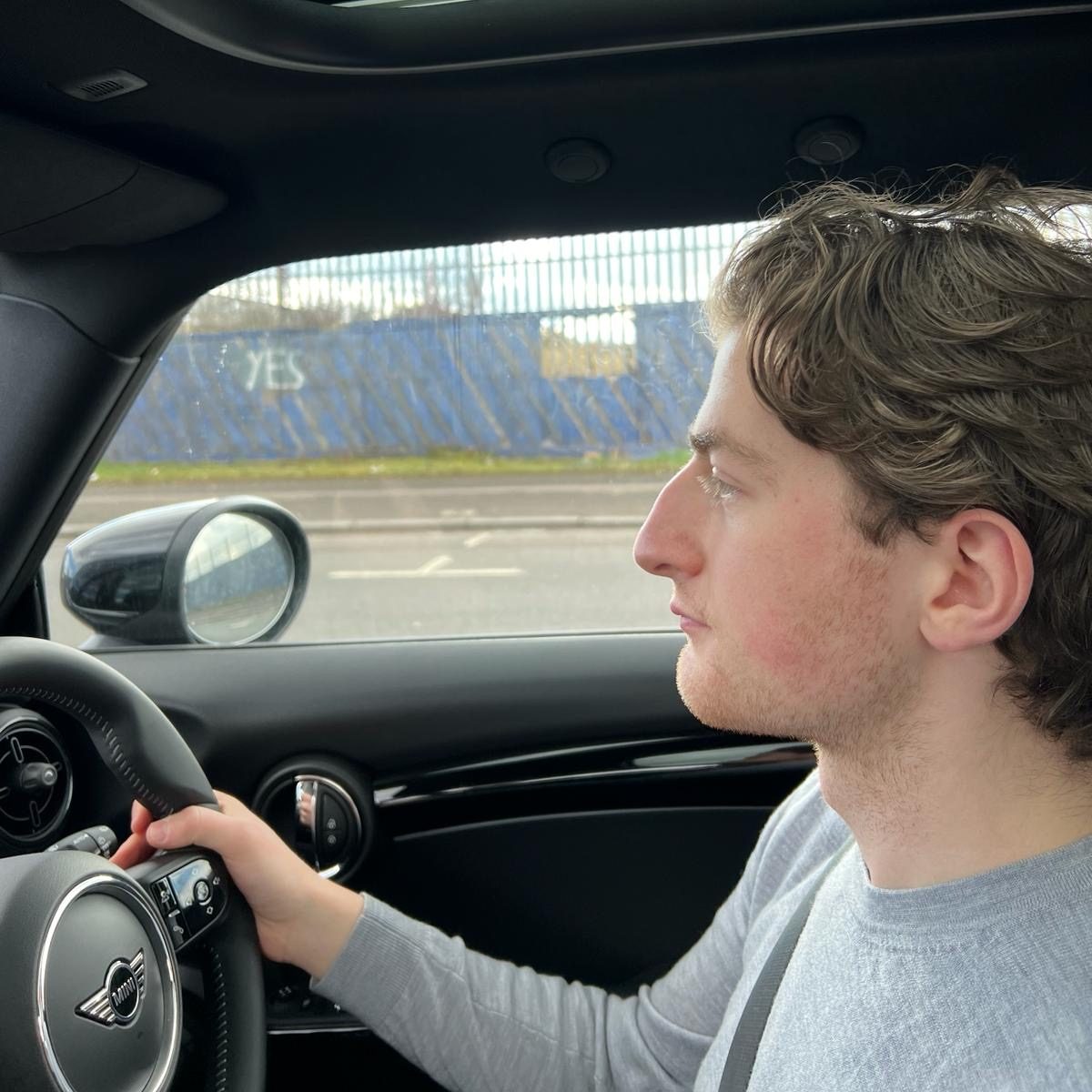
This is a shame, as the sense from the driver’s seat is that the Mini would be a nice place to spend a long journey. On the A739 leading to Glasgow’s Clyde Tunnel, the closest I get to a motorway environment on my city centre test drive, it doesn’t feel out of place.
The suspension copes well with the potholes (or should that be craters?) which scar the tarmac and it keeps pace with the traffic without draining its battery.
Switching the driving mode from Normal into Green, which elicited an emerald glow from the cabin’s mood lighting, I noticed the car’s acceleration ease and, when I took my foot off the pedal, the increased forcefulness of the regenerative braking as it extracted more energy from slowing down.
Green+ gives much the same feeling, but turns off any climate control in the cabin to send the maximum power to the battery, a feature no doubt intended to help coax the car to the nearest charging point if you’re in the red.
On the subject, the cabin is bathed in scarlet light when Sport mode is engaged as the already responsive Mini is turned up a notch. The steering is more direct and the throttle more sensitive.
Over a sprint distance, the electric car feels like it could rival the fastest petrol models in the Mini range.
Thanks to its starring role in The Italian Job, the Mini is globally recognised as THE nippy small car, zipping and darting around town. The inclusion of a performance driving mode shows that BMW wants the car to carry that reputation into its electric era.
While it is a well-worn cliché, the switch to battery power might have made the Mini easier to drive and more ‘go kart’-like than ever before. Far from losing one of its most recognisable traits, it’s part of the brand’s identity that has been protected by becoming an EV.
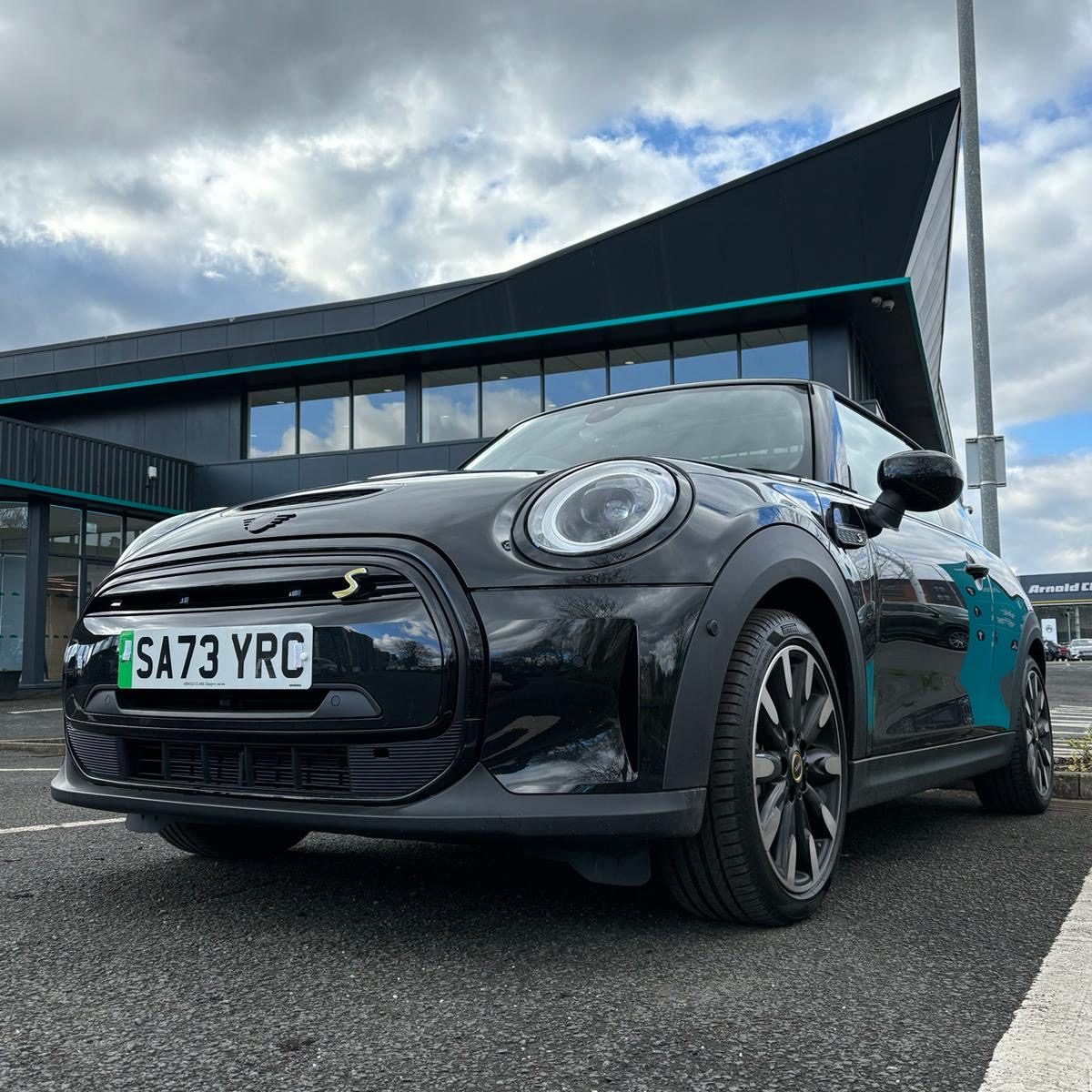
There is a contradiction to the electric Mini: it has sportiness in its DNA, and it encourages you to have fun, but you’re conscious that you’re eating into its already limited battery life.
As battery technology improves, hopefully owners will get the best of both worlds.
My impression was that the car felt sharp, and exciting, enough in Normal mode, but I’m sure a lot of owners will enjoy the knowledge that there’s a sport mode if they want it.
The Mini is certainly punchier than a lot of other cars in its class, and at the same time the most luxurious. Perhaps the Fiat 500e and recently discontinued Honda e are its closest rivals, with similarly elegant and retro designs.
The Honda also offers a well-equipped cabin, with even more gadgets, but its range is shorter than the Mini’s. Unlike the others, the Fiat is offered in two battery sizes, so it has an advantage for drivers who need to travel further.
The outgoing Renault Zoe is a more practical package than all of those, but doesn’t offer the same quality or style, something Renault no doubt wants to change with the 5 which replaces it.
As fun and toy-like as the car I have described here might sound, it carries a very grown-up price tag.
This Level 3 car costs £34,550 new, a lot of money for city transportation. But then again, Mini is a premium brand and customers don’t seem to mind spending money on them. It’s also possible to save £2,000 if you can do without a sunroof, HUD and full leather interior.
Sadly, it hasn’t been immune to the heavy depreciation of electric cars seen across the second-hand market, but that is good news for those looking to buy used with a lot of three-year-old cars available at essentially half-price.
Overall, the Mini is a joy to drive and a very good package for a vehicle that wasn’t designed as an EV from the outset.
It would make a great ownership prospect for someone who wants a stylish, zero-emissions city runabout, and will attract a lot of repeat Mini customers to switch to electric.
Crucially, it does more than just trade off its legacy name. It brings Mini into the EV era, DNA intact.
This article – my first attempt at writing a car review – was originally published in April 2024 for my Journalism dissertation project, Road to Recovery: the future of the UK motor industry.
Since writing, the Mini Electric has been replaced by a new model designed as an EV from the outset – I’d certainly like to compare that to the previous generation car in a future review.
I’d like to thank Lewis & Katy at Arnold Clark Innovation Centre Glasgow for being so accommodating.
 Maclean's Machines